
Be Present: An Improv Principle for Better Work
Katie's Dusty Laptop Reminder
December 2025
Be Present
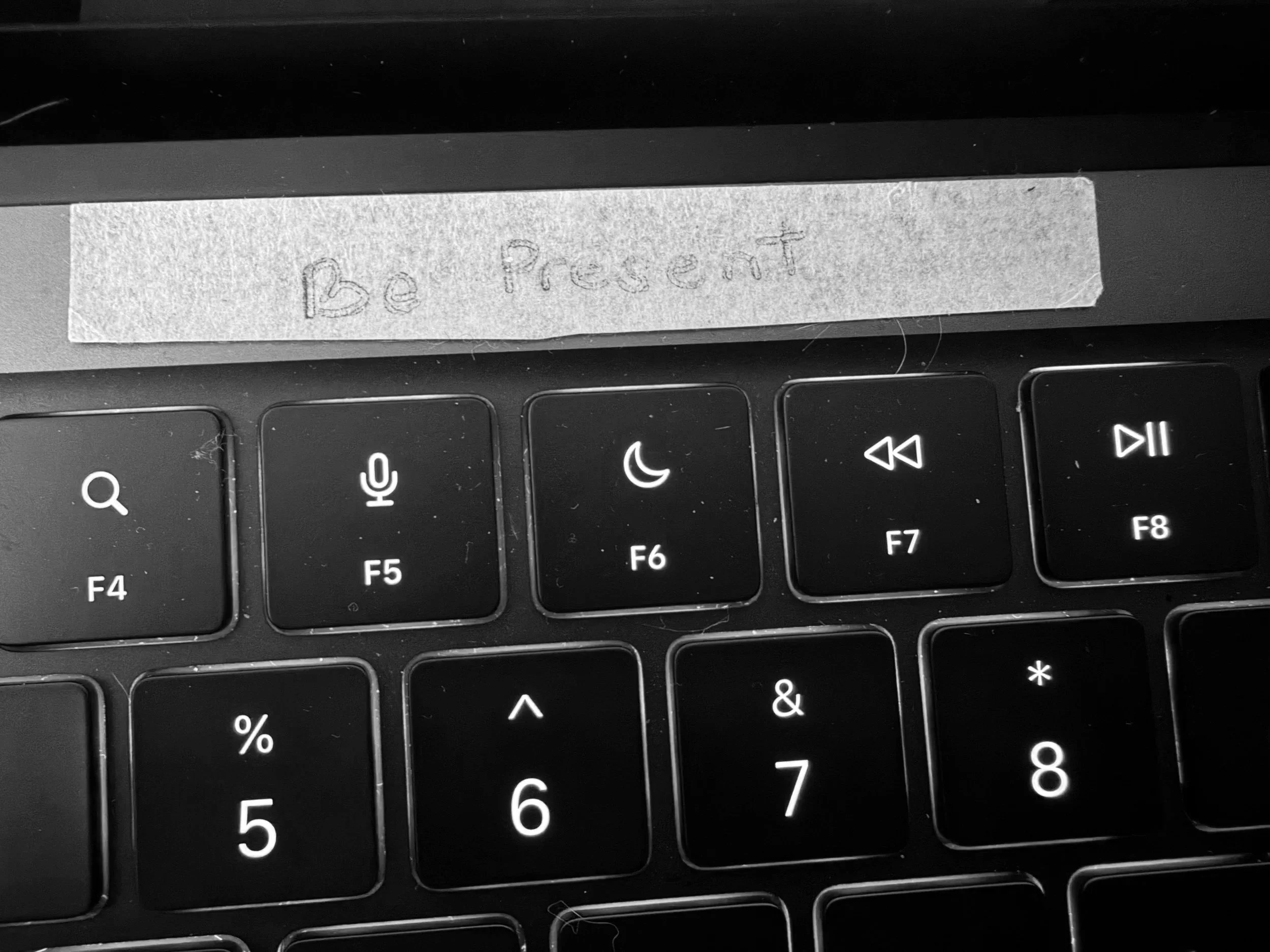
In the small space between the keys and the screen of my laptop sits a faded scrap of Post-it note, cut into a thin rectangle to fit that little nook perfectly. On it, though worn with time, you can still make out the reminder I wrote to myself four or so years ago: Be Present.
This note has impressively survived three laptop upgrades and seems to be going strong. Kudos to the glue people at Post-it!
I don't remember the exact moment that inspired the note, but it was during a time when I was solo-running the training and knowledge management program for an electric scooter company. For some reason, it was then, nearly ten years into my career in tech mobility startups, that I realized staying present was something I needed to work on.
As someone who plans thoughtfully and takes pride in anticipating challenges, it took me a while to see that my future-focused mindset was not always serving me. Instead of pausing to celebrate wins, my brain immediately jumped to the next problem. In meetings, I too often multitasked, firing off emails or juggling other work rather than being fully engaged.
For a long time, I labeled this behavior as dedication. I leaned into it. I took pride in it. And I was not alone. I saw the same patterns modeled by leaders I admired. Eventually, though, I realized much of that drive was rooted in anxiety. An over-focus on the future. And too often, it pushed me to move too fast.
This conundrum reminds me of what Liz Wiseman calls “accidental diminishers” in her book Multipliers. As leaders, we can genuinely believe we are being helpful while unknowingly causing harm. When people fail to pause and stay present, things get missed. Wins go uncelebrated. Culture takes a hit.
All that future-thinking turns many of us into serial multitaskers without a second thought. The truth is, no matter how skilled we think we are at multitasking, we're not. Science backs this up. Details slip through the cracks, and people can feel when they are not being fully listened to. Being on the receiving end of that never feels good, and it certainly does not inspire connection.
What Improv Has to Teach Us About Staying Present
If you are new to this blog, this pivot to improv comedy might feel unexpected. But it is foundational to everything we write. My co-founder Alex and I are longtime professional improvisers, and over a combined 30 years of performing and teaching, we have seen how much overlap exists between strong leadership and strong improv.
In long-form improv, staying present is not optional. It is essential. Many core principles simply do not work without it. A few examples:
Active listening
If a highly trusted mayor suddenly kicks a puppy onstage, that choice matters. Miss it, and you risk confusing or frustrating the audience. Improvisers listen with their ears and eyes, tracking details that shape the entire show.
Show, don’t tell
It is far more engaging to watch someone rob a bank than to hear them talk about robbing a bank. Strong improv takes action in the present moment rather than recapping the past or plotting too far ahead.
Be changed
Just because you are playing Santa Claus does not mean you are the good guy. You might enter a scene expecting to make toys and end up imprisoning vampires and werewolves for your wife’s entertainment. (A real reference to our recent TBD the Improvised Musical show). Staying present allows improvisers to adapt, say “yes, and,” and let the scene evolve.
Improv at Work
Alex and I often close our corporate workshops with a moment of reflection. We ask participants one simple question: What do you want to take away from today’s session?
Regardless of the stated learning objectives, we almost always hear the same response from several people: I want to practice staying present.
If your leaders or teams need a fresh perspective on why presence matters, or simply a joyful reminder, we can help.
Cheers to being present in 2026,
-Katie